
Expert InsightSmart Home
Can a Smart Lock Work With Your Existing Irish Front Door?
Often, yes—but the door mechanism matters more than the app. Understand multipoint locks, handle lifting, cylinder compatibility and everyday access before choosing a smart lock.
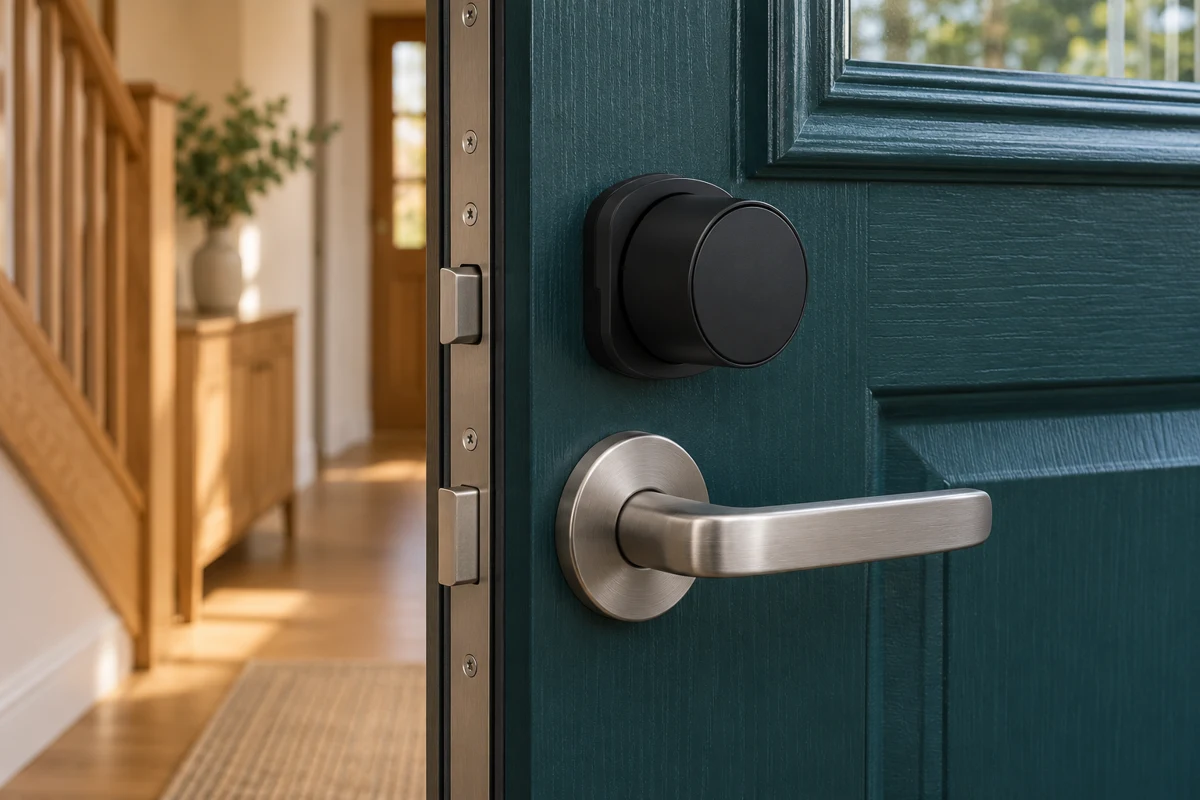
Start with the door you already have
A smart lock can make arriving home, letting a visitor in or withdrawing an old access code much simpler. Many retrofit products add a motor to the inside of an existing door, while other designs replace the cylinder or a larger part of the locking mechanism. The right route depends on the exact door and lock, rather than whether the house is old or new.
For an Irish home with a composite or uPVC front door, begin with photographs of the inside, outside and door edge. Check how the key, handle and latch behave. A door that catches, needs a shove or becomes stiff in cold weather needs mechanical attention before adding a motor. Automation should operate a sound mechanism.
A practical approach
Start with the door you already have
- InspectDoor, cylinder and handle.
- OperateCheck the full locking sequence.
- MatchChoose a compatible product.
Multipoint locking and lifting the handle
A multipoint mechanism secures the door at several positions. On a lift-to-lock door, someone normally raises the handle to engage that mechanism before turning the key. A retrofit motor that turns the cylinder does not necessarily lift the handle for you. Check the manufacturer’s instructions for the particular mechanism and product.
This matters especially for automatic locking: a scheduled command cannot make an incompatible door mechanically ready to lock. Some door mechanisms engage differently, and specialist products may support other arrangements. We would confirm the actual sequence and demonstrate it with the door in normal daily use before promising hands-free locking.
A practical approach
Multipoint locking and lifting the handle
Choose the cylinder and fallback together
Check cylinder type, mounting clearance, how far it projects and whether the smart lock fits beside the handle and frame. Nuki, Yale Linus, Aqara U200 and SwitchBot Lock Ultra are examples worth assessing against the exact door. They are not interchangeable: use the compatibility guidance for the particular model and region.
For example, Yale’s Linus guidance flags an auto-lock limitation on doors requiring the handle to be lifted. Aqara’s U200 manual specifies cylinder and key-clearance requirements, including outside key access with the interior key inserted. SwitchBot provides a separate compatibility and mounting guide. These checks help establish the suitable option before comparing app features.
Plan physical access from outside while the inside mechanism remains fitted. A suitable emergency-function cylinder can permit use of an outside key even with a key inserted inside; verify this on the exact assembly. Keep any permitted key fallback accessible to the household. Agree changes with a landlord where relevant, and check door warranty and insurer requirements before replacing security hardware.
A practical approach
Choose the cylinder and fallback together
- FitCylinder and mounting clearance.
- FallbackProve outside key access.
- ApprovalCheck property requirements.
Decide who needs access—and for how long
A keypad can help a family member who does not carry a smartphone. Time-limited credentials can suit a cleaner or a visiting tradesperson, where the selected system supports them. Give each person their own access rather than sharing one permanent household code, and remove permissions when they are no longer needed.
Remote unlocking, door-position sensing and smart-home integrations are separate capabilities. A motor reporting a locked position does not by itself prove that the door is closed. We would check which features require a hub, internet connection or subscription, and start with deliberate access rules rather than adding automatic unlocking simply because it is available.
A practical approach
Decide who needs access—and for how long
Test batteries, connectivity and leaving safely
Ask what happens when the phone is flat, broadband is unavailable or the lock battery is depleted. Local access methods and battery warnings differ by product. A working warning needs someone responsible for charging or replacement; it is not a substitute for an agreed fallback.
The handover should demonstrate manual operation, safe exit from inside, physical fallback access and recovery after a battery change. Test with another person present and a safe alternative way in. Where the door forms part of an escape route, its hardware and installation need suitable assessment; convenient access must also work in an emergency.
A practical approach
Test batteries, connectivity and leaving safely
- BatteryWarnings and maintenance.
- OfflineTest the available methods.
- ExitCheck manual operation.
A practical retrofit starts with a short survey
Send us the door photographs and describe what you want to improve: everyday family access, visitor codes or integration with your existing smart home. We can assess the compatible options, identify any locksmith work and agree the scope before equipment is ordered.
The result should be a door everyone in the household understands. That includes a clear demonstration of locking, unlocking, managing access and using the fallback—not just installing an app. Any cylinder replacement, keypad, hub or additional work should be included in the agreed quotation.
A practical approach
A practical retrofit starts with a short survey
- SurveyInspect the existing door.
- InstallAgree hardware and scope.
- HandoverPractise everyday access.
Sources & Further Reading
References checked 26 November 2026. Features and service availability can change.
Planning something similar?
Tell us what you already have and what you would like to improve. We will help plan the next practical step.
Discuss Your Project