Expert InsightAI & Business Automation
Less Time Chasing Invoices: Smarter Payment Follow-ups for Small Businesses
Connect your accounts, payment records and customer replies to make follow-ups more consistent. Use clear rules for reminders and AI for useful preparation, with disputes and important decisions routed to your team.
Start with a reliable outstanding balance
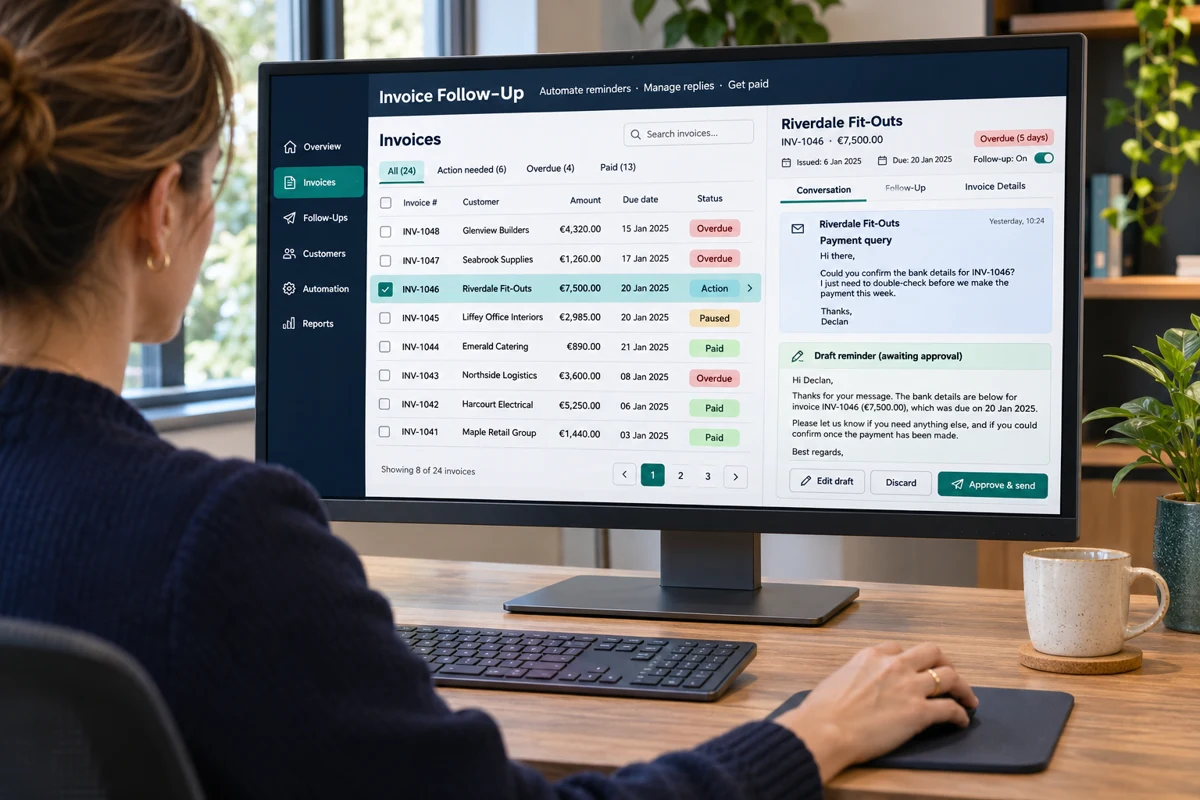
Following up an invoice should begin with the current account record: who owes what, the agreed due date, any credits and the correct contact. If payments are still waiting to be reconciled, an automatic reminder can chase someone who has already paid. Connecting software is useful only when those records are dependable.
Use your accounting system as the authority for balances and invoice status. Check whether its existing reminder features already meet the need before building an additional workflow. A small business may get most of the benefit from better records, a clear schedule and one person owning the exceptions.
A practical approach
Start with a reliable outstanding balance
- InvoiceCorrect reference and due date.
- BalanceInclude payments and credits.
- ContactUse the right recipient.
Let rules decide when a reminder is appropriate
A sensible schedule can prepare a friendly message before the due date, another after it and a review task if the balance remains outstanding. These are business rules, not predictions. Agree the timing and tone around your customer relationships, and check the record again immediately before any message is released.
Exclude invoices on hold, disputed balances, missing contact details and agreed payment plans where a standard reminder would be inappropriate. Use a stable invoice reference and send history to avoid duplicates after a retry. If payment synchronisation or the accounts connection fails, pause outgoing reminders and alert the person responsible.
A practical approach
Let rules decide when a reminder is appropriate
Use AI to understand the reply
A customer may say they need a purchase-order reference, have paid part of the amount or want to query the work. AI can help classify that reply, summarise the issue and prepare an appropriate draft. The original message should remain available beside the suggestion so a person can assess it.
AI should not invent a payment date, alter bank details or decide that a balance is settled. Match payment evidence through the accounting process. Promises to pay, requests for revised terms and uncertain messages should become review tasks with a named owner. An unanswered query needs attention rather than a progressively firmer automated email.
A practical approach
Use AI to understand the reply
- UnderstandSummarise the customer reply.
- PrepareDraft the next useful response.
- ReviewKeep decisions with your team.
A worked example: payment arrives before sending
Imagine an illustrative €600 invoice due last Friday. A reminder is queued for Monday morning, but a €200 part-payment is recorded before release. The workflow rereads the balance, recognises €400 remains and prepares a message against that amount. If the payment cannot yet be matched confidently, it pauses for review instead.
Now the customer replies that one line is disputed. The routine schedule stops for that invoice and the accounts owner receives the reply, invoice reference and a short summary. Once the issue is resolved, the approved balance and next contact date are updated in the accounts process before reminders resume.
A practical approach
A worked example: payment arrives before sending
Protect the relationship and the account
Keep access limited to the records the workflow requires. Where supported, separate reading invoice status from changing accounts or sending mail. Store credentials securely, retain a useful audit trail and agree how long customer messages and AI-generated drafts are kept. Choose services and data arrangements appropriate to the business.
Start with drafts requiring approval. Routine messages can later follow an explicitly agreed sending policy after the pilot is proven. Discounts, revised terms, fees, formal demands and changes to payment instructions should remain separately controlled. Independently verify any request to change bank details; a plausible email or AI summary is not verification.
A practical approach
Protect the relationship and the account
- AccessOnly the records required.
- ApprovalAgree what may be sent.
- AuditKeep the action history.
Pilot one group of invoices and measure the work
We would map your accounting platform, payment updates and mailbox first, then choose a small set of straightforward invoices. Build the reminder rules, exception queue and draft review before enabling routine sending. Test full and partial payments, credits, disputes, repeated events and an unavailable connection.
Measure time spent following up, incorrect reminders, unresolved queries and how quickly exceptions receive attention. Payment timing depends on the customer as well as the workflow, so an automation cannot guarantee faster settlement. The practical goal is consistent contact, fewer avoidable mistakes and a clearer view of what needs a person next.
A practical approach
Pilot one group of invoices and measure the work
- PilotUse a bounded invoice group.
- TestInclude real exceptions.
- MeasureTime, accuracy and response.
Sources & Further Reading
References checked 26 November 2026. Features and service availability can change.
Planning something similar?
Tell us what you already have and what you would like to improve. We will help plan the next practical step.
Discuss Your Project